
How Rehabilitation Supports Recovery After a Workplace Injury: A Practical Guide for Canadians

A workplace injury can change far more than our ability to do a job. Pain may affect sleep, mobility, concentration, and confidence, while time away from work can create financial and emotional pressure. The right rehabilitation plan gives us a structured path forward. It can help us regain physical function, manage symptoms, protect our mental health, and return to work without rushing a process our bodies are not ready for.
Workplace injury rehabilitation is not a single treatment or a quick series of exercises. It is a coordinated process shaped around our injury, job demands, health history, and recovery goals. In Canada, it may also intersect with provincial or territorial workers' compensation systems, employers, physicians, therapists, and insurers. Understanding how these pieces fit together helps us make informed decisions and participate more confidently in recovery.
Key Takeaways
Workplace injury rehabilitation provides a personalized, coordinated plan that helps restore physical function, manage symptoms, and supports mental health recovery.
Early, tailored rehabilitation reduces the risk of long-term disability by promoting safe movement and strength maintenance specific to job demands.
Active participation in rehabilitation, including exercises and honest symptom reporting, is essential for successful recovery after a workplace injury.
Physical rehabilitation and pain management strategies work together to rebuild strength and prevent reinjury while avoiding exacerbation of symptoms.
Mental health support is a crucial component of rehabilitation, addressing anxiety, depression, or trauma resulting from the injury and facilitating overall recovery.
A gradual, function-based return-to-work plan involving healthcare providers, employers, and insurers ensures safety and sustainable reintegration into the workplace.
What Workplace Injury Rehabilitation Involves
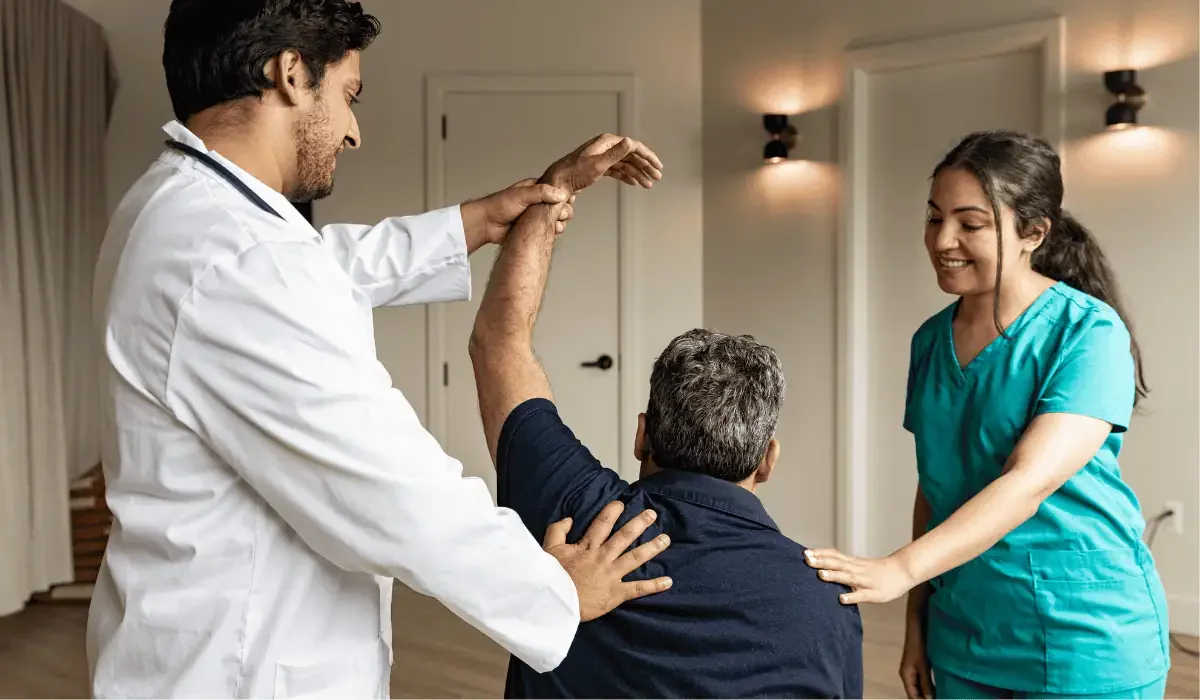
Workplace injury rehabilitation is the process of helping us recover as much safe, practical function as possible after an accident, repetitive strain, or work-related illness. Depending on the injury, it may include physiotherapy, occupational therapy, medical care, psychological support, pain management, and workplace planning.
The first step is usually an assessment. A healthcare professional considers our symptoms, strength, range of motion, balance, endurance, work tasks, and medical history. We may also discuss what makes symptoms worse, what daily activities have become difficult, and what we need to do at work. This information helps create measurable goals rather than relying on vague instructions such as "take it easy."
A rehabilitation plan can include hands-on treatment, therapeutic exercises, education, equipment, modified duties, and follow-up appointments. For example, someone with a back injury may work on core strength and lifting technique, while someone with a hand injury may need exercises, splinting, and a gradual return to gripping tasks.
Rehabilitation is active. Our participation matters, including completing prescribed exercises, reporting changes honestly, attending appointments, and asking questions when instructions are unclear. Progress rarely moves in a perfectly straight line. A good plan can be adjusted as our symptoms and abilities change.
Why Early, Personalized Rehabilitation Matters
Early rehabilitation can reduce the risk that a temporary limitation becomes a long-term barrier. Once serious conditions have been assessed and immediate medical needs addressed, appropriate movement and treatment often help us maintain strength, flexibility, circulation, and confidence. Prolonged inactivity can lead to stiffness, deconditioning, fear of movement, and difficulty resuming ordinary tasks.
Early does not mean rushing. It means receiving the right guidance at the right time. With a fracture, concussion, severe pain, or another significant injury, our first priority may be protection and medical stabilization. A physician or therapist can tell us which activities are safe and which should wait.
Personalization matters because two people with the same diagnosis may have very different jobs and recovery needs. A warehouse worker, office employee, nurse, and construction worker may all experience shoulder pain, but their essential duties are not alike. A rehabilitation plan should account for lifting, reaching, driving, standing, computer use, shift schedules, protective equipment, and workplace hazards.
We also need goals that are meaningful to us. "Improve mobility" is useful clinically, but "walk from the parking lot to our workstation" or "lift a light box safely" is easier to understand and measure. Regular reassessment allows the care team to increase, reduce, or change treatment instead of keeping us on an outdated program.
The Main Goals of a Workplace Injury Recovery Plan
A workplace injury recovery plan usually has several connected goals:
Reduce symptoms: Treatment may address pain, swelling, weakness, dizziness, sleep disruption, or other symptoms that interfere with daily life.
Restore function: We work toward practical abilities such as walking, using a hand, climbing stairs, concentrating, or completing personal care.
Prevent reinjury: Education about body mechanics, pacing, ergonomics, and safe equipment use helps us avoid repeating the original problem.
Build capacity: Gradual strengthening and conditioning prepare us for the physical, cognitive, and emotional demands of our job.
Support independence: The aim is not simply to feel better in a clinic. It is to function more safely at home, in the community, and at work.
Plan a sustainable return: We identify suitable duties, restrictions, hours, and milestones rather than treating a return date as the only measure of success.
These goals should be specific and reviewed regularly. We might begin with standing for 10 minutes, then progress to 20 minutes, followed by short periods of walking. A person recovering from a concussion may start with limited screen time and gradually increase mental activity. Small, consistent gains are still gains.
A recovery plan should also identify warning signs. Worsening pain, new numbness, increasing weakness, fainting, severe headache, confusion, or major changes in mood may require prompt medical attention. We should never feel pressured to hide symptoms to appear ready.
Physical Rehabilitation: Restoring Strength, Mobility, And Function

Physical rehabilitation focuses on helping our bodies move and work more effectively. Physiotherapists may use therapeutic exercise, movement training, education, manual techniques, balance work, and functional practice. The specific approach depends on the injury and our stage of recovery.
Early treatment may concentrate on reducing swelling, maintaining gentle movement, protecting an injured joint, or restoring basic walking. Later, we may work on strength, endurance, coordination, balance, and job-specific tasks. Someone returning to a physically demanding role may need a conditioning program that gradually resembles the real work environment, including lifting, pushing, pulling, carrying, or repeated movement.
Technique matters as much as effort. Performing an exercise with poor form, progressing too quickly, or ignoring pain signals can delay recovery. We should understand the purpose of each exercise, how often to do it, and what response is expected afterward. Mild, temporary soreness may be normal, while sharp pain, significant swelling, or a clear decline in function deserves attention.
Rehabilitation can also address practical tools. Braces, orthotics, mobility aids, ergonomic changes, and adaptive equipment may reduce strain while we rebuild capacity. These supports are not signs of failure. Used properly, they can make everyday activities safer and give us room to recover.
Managing Pain While Avoiding Further Injury
Pain is important information, but it does not always provide a complete picture of tissue damage. We can learn to distinguish expected discomfort from warning signs with help from our healthcare team. Pacing is often useful: we break demanding tasks into manageable periods, alternate activity and rest, and increase workload gradually.
We should follow medical advice about medication, ice or heat, sleep, and activity. If pain remains severe, spreads, disrupts sleep, or prevents participation in rehabilitation, we should report it rather than simply pushing through. The goal is not to prove toughness. It is to restore function safely and sustainably.
Mental Health Support After a Workplace Accident
A workplace injury can affect mental health even when the physical injury appears straightforward. We may feel anxious about pain, frustrated by lost independence, guilty about missed work, or worried that coworkers and employers will view us differently. A serious accident can also lead to trauma symptoms, depression, sleep problems, or fear of returning to the scene of the injury.
These reactions deserve attention. Psychological support may come from a family doctor, psychologist, social worker, counsellor, or another qualified professional. Treatment could include education, coping strategies, trauma-focused therapy, cognitive behavioural therapy, medication, or support for sleep and stress. We do not need to wait until symptoms become overwhelming before asking for help.
Mental health and physical recovery influence each other. Poor sleep can increase pain sensitivity. Anxiety may make movement feel dangerous, even when a therapist has confirmed it is safe. Low mood can make exercises and appointments harder to manage. Addressing these issues is part of workplace injury rehabilitation, not a distraction from it.
We can also use practical supports: keeping a regular routine, staying connected with trusted people, setting small daily goals, and tracking progress. If we experience thoughts of self-harm or feel unable to stay safe, we should seek immediate emergency help or contact a local crisis service. There is no need to manage that situation alone.
How Healthcare Professionals Coordinate Your Recovery
Recovery is often strongest when the people involved share clear, relevant information. A family doctor or specialist may diagnose the injury and oversee medical treatment. A physiotherapist may address movement and strength. An occupational therapist may assess daily activities, workplace demands, ergonomics, and equipment. A psychologist or counsellor may support mental health. Nurses, pharmacists, vocational specialists, and case managers can also contribute.
Coordination helps prevent conflicting advice. For example, a therapist may need to know about a medication change, a new scan result, or restrictions imposed by a specialist. We can help by keeping a list of appointments, medications, symptoms, questions, and functional changes. With our consent, relevant reports can be shared among the appropriate professionals.
We should ask who is responsible for the overall plan and when it will be reviewed. It is reasonable to request plain-language explanations of our diagnosis, restrictions, treatment options, and expected milestones. If recommendations conflict, we can raise the issue directly instead of trying to choose between them ourselves.
Employers may also be involved in return-to-work planning, but medical details should be handled appropriately and respectfully. Usually, the employer needs functional information, such as lifting limits or reduced hours, rather than every detail of our diagnosis. Privacy rules and workers' compensation procedures vary, so we should clarify what information is required and why.
Returning To Work Safely And Gradually
Returning to work can be an important recovery milestone, but it should be based on function and safety rather than pressure or optimism alone. A gradual return may begin with shorter shifts, fewer physically demanding tasks, additional breaks, modified equipment, or temporary restrictions. As our capacity improves, duties and hours can increase in planned steps.
A useful return-to-work plan describes what we can do, what we should avoid, how long the restrictions apply, and when reassessment will occur. Restrictions should be specific. "No heavy work" is less helpful than "no lifting over 10 kilograms, no repetitive overhead reaching, and alternate sitting and standing as needed." The plan should reflect essential job duties and actual workplace conditions.
Communication is central. We, our healthcare provider, employer, and workers' compensation representative may need to discuss progress and barriers. We should report problems early. A task that repeatedly causes a symptom flare may need modification, better equipment, more training, or a slower progression.
A return to work is not necessarily all or nothing. Productive modified duties can maintain connection, routine, and confidence while allowing further recovery. At the same time, we should not be assigned tasks that contradict medical restrictions or place us or coworkers at risk. A safe return is one we can sustain after the first week, not merely survive on the first day.
Workers’ Compensation And Rehabilitation Support In Canada

Workers' compensation is administered by provincial and territorial boards, so processes differ across Canada. Depending on where we live and the circumstances of the injury, the system may cover approved medical treatment, rehabilitation services, wage-loss benefits, travel to appointments, equipment, or return-to-work support. We should report the injury promptly to our employer and follow the relevant board's claim process.
We should keep copies of incident reports, medical notes, treatment recommendations, receipts, appointment dates, and communication with the employer or compensation board. Accurate records make it easier to explain what happened, how symptoms changed, and which services we need. We should also ask about deadlines, claim decisions, appeal rights, and whether a service requires prior approval.
Workers' compensation does not replace medical advice. We remain responsible for telling healthcare professionals about our symptoms and following the treatment plan. If a claim is delayed or disputed, we can ask the compensation board about available assistance and seek advice from a worker representative, union, legal clinic, or qualified adviser. We should avoid making assumptions based on another province's rules because eligibility and procedures vary.
Rehabilitation support may continue through several stages, from acute treatment to functional recovery and vocational planning. The focus should remain our safe recovery and ability to participate in suitable work, not simply closing a file quickly.
When Recovery Takes Longer Than Expected
Some injuries improve within weeks. Others take months or involve permanent limitations. A slower recovery does not mean we have failed. It may indicate that the diagnosis needs review, treatment should change, another health issue is affecting progress, or the return-to-work plan is too aggressive.
We can ask for a formal reassessment and updated goals. The care team may adjust exercises, investigate persistent symptoms, add psychological support, recommend workplace accommodations, or consider vocational alternatives. Patience is not passivity. By tracking function, communicating openly, and taking each safe step seriously, we give ourselves the best chance of building a workable future after injury.
Workplace Injury Rehabilitation FAQs
What does workplace injury rehabilitation typically involve?
It includes physiotherapy, occupational therapy, medical care, psychological support, pain management, and workplace planning tailored to an individual's injury, job demands, health, and recovery goals.
Why is early and personalized rehabilitation important after a workplace injury?
Early rehabilitation helps maintain strength and flexibility, reducing long-term barriers, while personalization ensures recovery plans align with specific job tasks and personal goals for safe, effective healing.
How does rehabilitation help manage pain without causing further injury?
By distinguishing expected discomfort from warning signs, pacing activities, following medical advice on medication and rest, and gradually increasing workloads, rehabilitation balances pain management with safe recovery.
What role does mental health support play in workplace injury recovery?
Mental health support addresses anxiety, depression, trauma, and sleep issues that can affect physical recovery, using therapy and coping strategies to improve overall rehabilitation outcomes.
How can someone safely return to work after a workplace injury?
A gradual return includes modified duties, reduced hours, and specific restrictions based on functional capacity, with ongoing communication among healthcare providers, employers, and the injured worker to ensure sustainable reintegration.
What is the role of workers’ compensation in supporting workplace injury rehabilitation in Canada?
Workers' compensation boards may cover treatment, rehabilitation services, wage loss, and return-to-work support, with processes varying by province; prompt injury reporting and detailed record-keeping are essential.